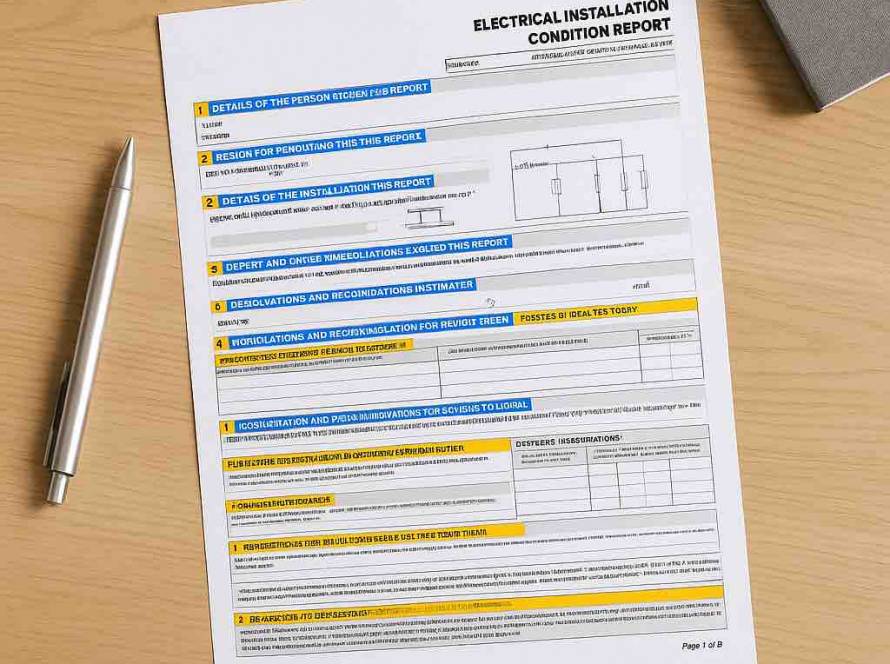
If you’ve recently completed an EICR, you may be wondering what comes next, especially if the report contains C1, C2 or FI codes. This guide explains the full post-EICR process for homeowners and landlords, from understanding your results to carrying out remedial works and receiving the correct certification.
What Happens After an EICR? A Clear Guide for Homeowners & Landlords
An Electrical Installation Condition Report (EICR) is one of the most important documents you can obtain for your property’s electrical safety. But once the inspection is complete, many homeowners and landlords are left uncertain about what happens next, particularly if the result is marked as unsatisfactory.
This guide breaks down the full process in a clear, compliant way, helping you understand your responsibilities, next steps, and what documentation you should receive after any remedial work has been completed.
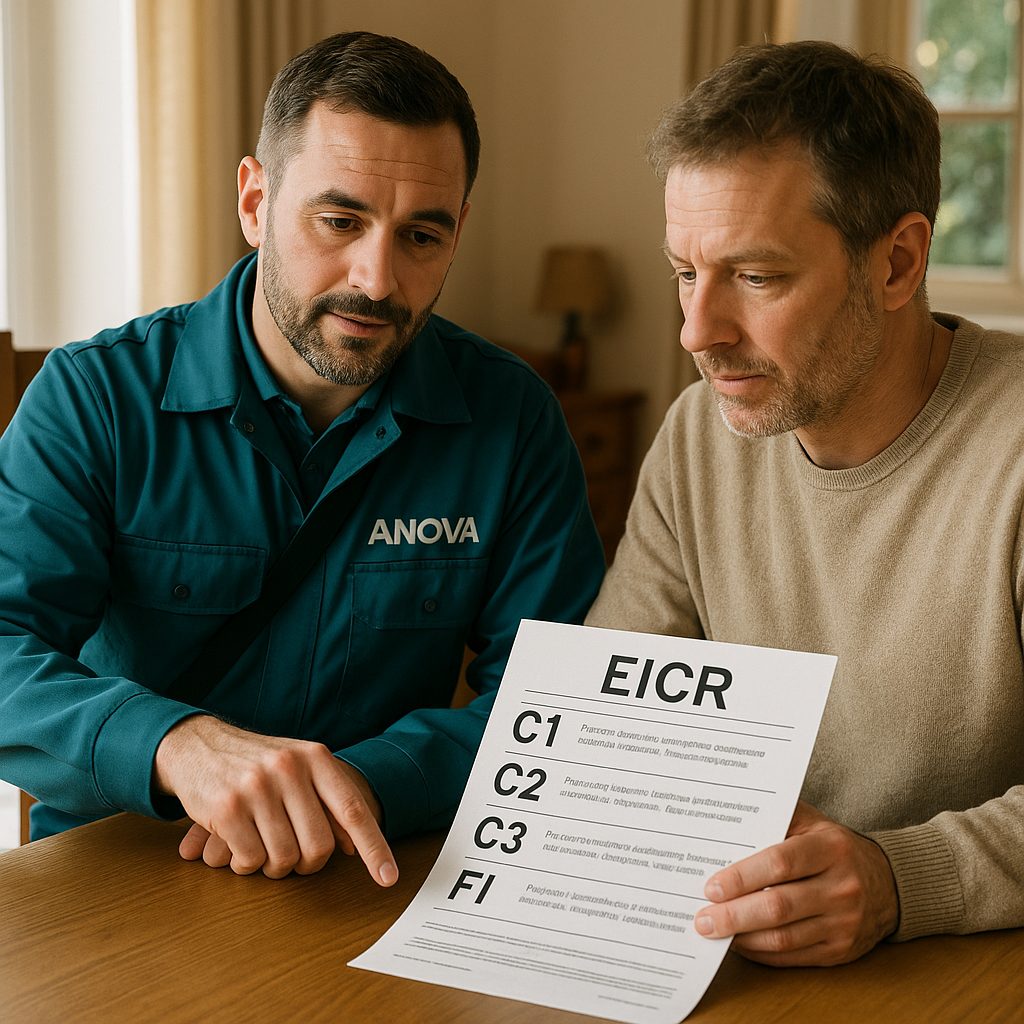
Satisfactory vs Unsatisfactory EICR — What It Means
When an EICR is completed, the electrician will classify the installation as either:
Satisfactory EICR
A satisfactory EICR means:
- No dangerous or potentially dangerous issues were found
- Only C3 recommendations may be present
- The installation is safe for continued use
A C3 simply means “improvement recommended” it does not require remedial work to pass the inspection.
You will receive:
- A classification of “Satisfactory”
- Your full EICR
- Peace of mind knowing your installation complies with BS 7671 at the time of inspection
Unsatisfactory EICR
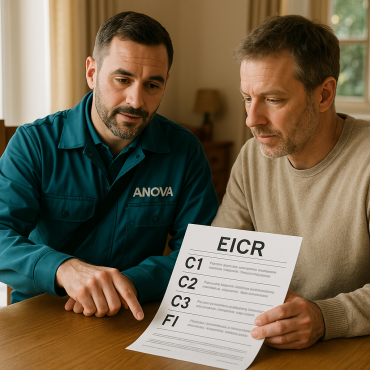
An unsatisfactory EICR means at least one of the following codes has been recorded:
| Code | Meaning | Required Action |
| C1 – Danger Present | Immediate risk of electric shock or fire | Yes – urgent |
| C2 – Potentially Dangerous | Could become dangerous | Yes – required |
| FI – Further Investigation | Safety cannot be confirmed | Yes – required |
If your EICR includes any C1, C2 or FI, it is classed as unsatisfactory.
Landlord Requirement:
Under the Electrical Safety Standards in the Private Rented Sector (England) Regulations 2020), landlords must:
- Complete required remedial works within 28 days,
- Provide written confirmation to both the tenant and local authority.
Can a Different Contractor Carry Out the Remedial Works?
Yes — absolutely.
You are not required to use the same contractor who carried out the EICR to complete the remedial work.
This is stated by all major UK certification bodies (NICEIC, NAPIT, ECA) any competent, qualified person can carry out repairs, as long as they can issue the correct certification afterward.
This gives homeowners and landlords the freedom to:
- Choose a contractor they trust
- Compare quotations
- Get a second opinion if the initial quote seems unclear or inflated
What Happens During Remedial Works?
Once the EICR has been reviewed, the contractor will:
- Identify the priority items (C1/C2/FI)
- Carry out repairs, replacements, or corrections
- Retest the affected circuits
- Issue the appropriate certification
What Certification Do You Receive After Remedial Works?
After remedial works are completed, you should receive:
Electrical Installation Certificate (EIC)
This is the official certificate used to confirm that new electrical work — or substantial alterations — has been carried out safely and meets BS 7671.
This is confirmed by leading UK electrical bodies:
- NICEIC: States that an EIC is required for “the installation of a new circuit or replacement of a consumer unit, or significant alterations.”
- NAPIT: Confirms that an EIC is required for any work affecting the safety of existing circuits.
- Electrical Safety First: States that remedial work following an unsatisfactory EICR must be evidenced via a valid EIC or MEIWC depending on scope.
Why not a new EICR?
Because:
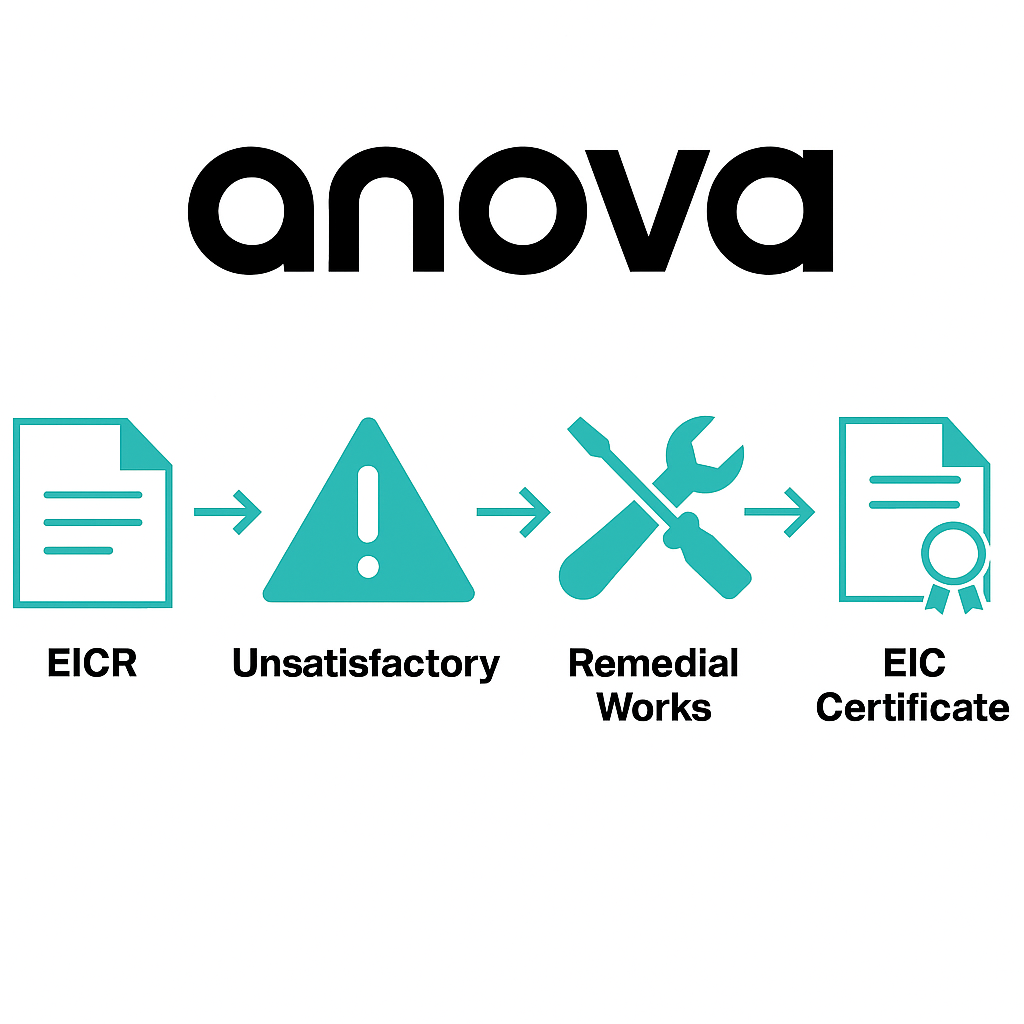
- The first EICR identifies defects
- The EIC confirms those defects have been resolved safely
A full retest and new EICR may also be carried out if requested, but the EIC itself is valid proof of compliance.
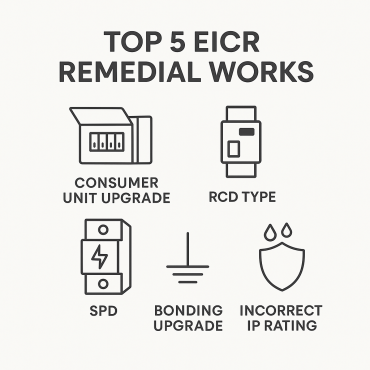
Examples of Common Remedial Works
Typical EICR-related repairs include:
- Replacing damaged sockets or switches
- Upgrading a consumer unit
- Correcting poor or exposed wiring
- Installing suitable RCD or RCBO protection – Incorrect RCD Type (Type A / Type AC)
- No presence of surge protection
- Upgrading earthing and bonding
- Repairing high-resistance or loose connections
- Rectifying circuits with no CPC or inadequate insulation resistance
- Repairing poorly completed DIY work
What About Part P Building Control?
In domestic properties, certain remedial works are notifiable under Part P of the Building Regulations, including:
- Consumer unit replacements
- New circuits
If the remedial work involves notifiable work, the electrician must:
- Notify Building Control on your behalf
- Provide you with a Building Regulations Compliance Certificate
- Ensure the work meets current safety standards
Summary – Understanding the Post-EICR Process
Whether you receive a satisfactory or unsatisfactory EICR, the process is clear:
Satisfactory EICR
- No urgent work required
- Recommendations may be included (C3)
- Installation safe to continue using
Unsatisfactory EICR
- One or more issues require attention
- Remedial work must be completed
- Certification is issued after repairs
Your Choice of Contractor
- Any competent contractor can carry out the remedial work
- You are not tied to the original inspector
Related Reading
For a deeper explanation of EICR codes and remedial work, see our blog:
👉 “EICR Remedial Works Explained: Understanding Your Report”
Need Help Understanding Your EICR? Send It to Us for Free Advice
f you’ve received an EICR and you’re unsure what the results mean — or you’d like a quotation for the remedial works — we’re here to help.
You can provide your report in either of the following ways:
Option 1: Email It to Us
Send your EICR to:
We will review your report and get back to you with clear guidance and next steps.
Option 2: Upload It Using the Form Below
Use the secure upload feature on this page to send your EICR directly to our team.
We’ll assess it and provide a transparent quotation, or simply offer free, no-obligation advice if you just want clarity.
Whether you need remedial works or simply want a second opinion, Anova is here to support you with compliance, safety, and honest guidance.
📞 Call: 02080516482
📩 Email: info@anovauk.com
💬 WhatsApp: Click the button below